





How it worksA Personalized K–12 Curriculum,
A Personalized K–12 Curriculum,
Taught By A 1:1 AI Tutor
We find your child’s level, build them a personalized curriculum,
teach every lesson 1:1, and show you how they’re progressing.
1STEP 1
Initial Assessment.
Find the gaps.
A short diagnostic pinpoints exactly where your child is strong and where the gaps are.Skills are mapped against the Common Core curriculum.Completed first, so we can personalize your child’s plan.
Know exactly where your child stands.
 “The lessons are fun, interactive, and tailored perfectly to his level.”Rosa M.
Diagnostic · Math3 gaps foundAlgebra82%Fractions34%Geometry61%Ratios45%
2STEP 2
Personalized Curriculum.
A plan built for them.
Luna builds a curriculum around those gaps.Every session works on what will move their grade the most.The curriculum updates as your child improves.
No wasted sessions. Ever.
 “His writing went from ‘Needs additional support’ to ‘Strong’.”Michael C.
This week's plan✓Simplifying fractionsDone · Mon2Equivalent fractionsIn progress · todayMixed numbersUp next
3STEP 3
1:1 AI Tutoring.
Always available.
Luna teaches step by step at your child’s pace.She will explain the same idea as many times as it takes.Available 24/7 — whenever your child needs it.
 1:1 tutoring can help the average student outperform 98% of their peers.Benjamin Bloom · “The 2 Sigma Problem”, 1984
4STEP 4
Motivation.
On autopilot.
Streaks, daily goals and progress keep your child coming back.You never have to ask twice.Progress you can see week by week.
“With previous tutors I often had to push him. Since he started, Aryan takes the initiative to study on his own.” Divya S.
✦ 12-day streak+50 XPMTWTFSSDaily goal80%
5STEP 5
Parent Reports.
See it for yourself.
A weekly report shows what your child learned, and what comes next. Progress is measured against the Common Core curriculum.Skills mastered, time on task and lessons done — at a glance.If something needs your attention, you hear about it first.
Never wonder how it’s going.
“Easy to understand and really helps build confidence. The support team is super responsive and friendly.”Stephanie W.Mia’s weekSent Sunday5lessons2h 10mon task+3skillsFractionsMasteredDecimalsIn progressPercentagesUp nextNext week: decimals, then on to percentages.
What families sayA revolution in
A revolution in
how children learn
2,600+ families can’t be wrong. Build your child’s skills and confidence.
My 10-year-old son, who struggled with and avoided writing, is now obsessed. Not only is he more willing to write, his overall English is improving.Joanne H.

The style of learning has allowed Lucas to gain confidence in his English skills.Diane F.

He used to be picky about his tutor, and I had changed many tutors for him. Until we found this.Grace L.
My son recently took an English writing class and I have to say it was an amazing experience.Rachel N.
My child liked how engaging the AI tutor was.Lauren B.
Helped me build confidence and improve substantially over the months.Dev R.
Interactive and engaging, so kids stay motivated to do the work.Anjali M.

It is really fun. I like every lesson and it really makes me want to do more.Kai L.
It is very human-like and is engaging for a child.Natalie G.
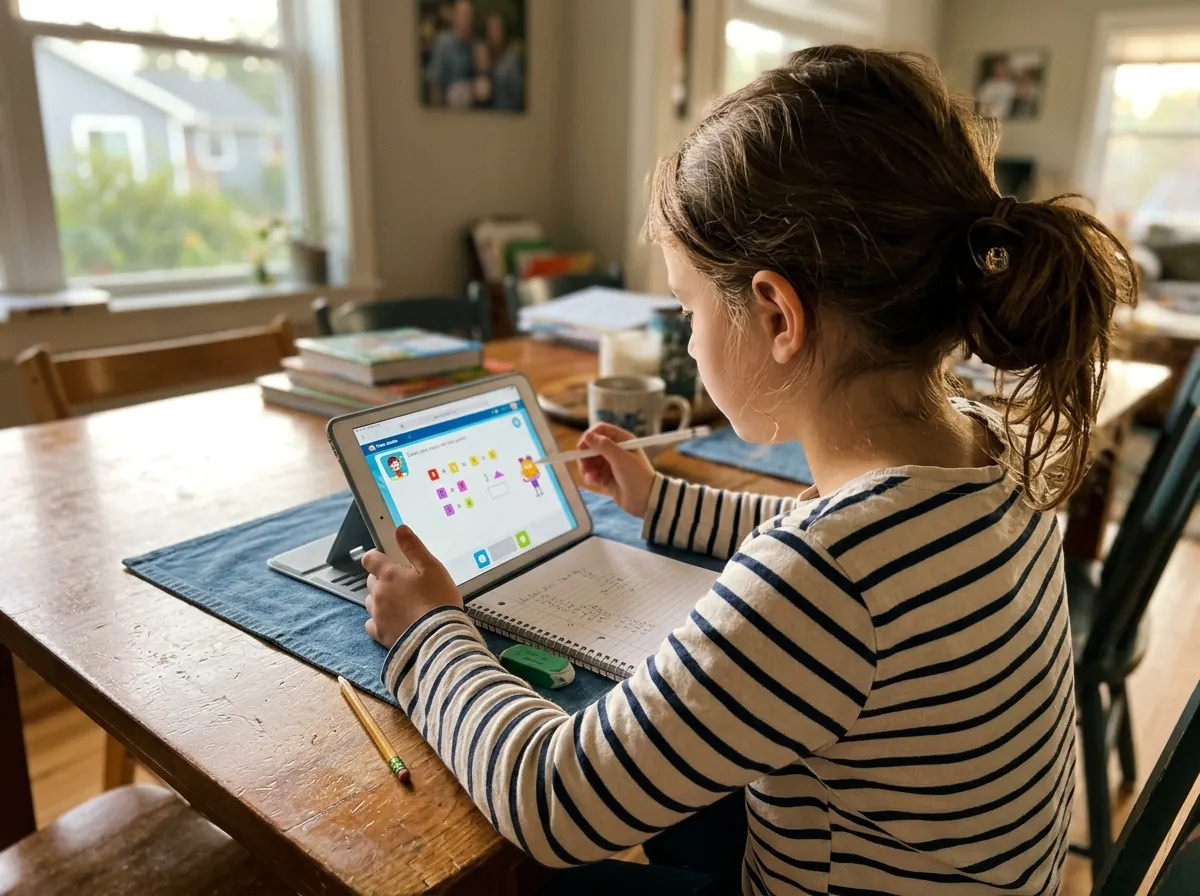
Ruby absolutely loves her lessons.Tara W.
The one-on-one is preferable in Maths with Luna. It gives her the chance to really slow down and work on a topic without feeling the need to rush on to another problem until she gets it right.Claire D.
The interactiveness is great. It definitely engaged my child a lot more than non-interactive programs.Priyanka V.
Reviews from families across our tutoring programs. Names changed and photos are illustrative, to protect families’ privacy.
See Luna in action
Try a real lesson with Luna
Choose something your child is learning and experience how Luna teaches it step-by-step, just like a private 1:1 tutor.
Questions