





How it worksA Complete K–12
A Complete K–12
Curriculum,
Taught
By A 1:1 AI Tutor
We find your child’s level, build them a personalized curriculum, and Luna teaches it one-on-one, every day.
1STEP 1
Initial Assessment.
Find the gaps.
✓A short diagnostic pinpoints exactly where your child is strong and where the gaps are.✓Skills are mapped against the Common Core curriculum.✓Done in one sitting, before any teaching starts.
“It found gaps two years of school reports missed.”Rachel T.
Diagnostic · Math3 gaps foundAlgebra82%Fractions34%Geometry61%Ratios45%
2STEP 2
Personalized Curriculum.
A plan built for them.
✓Luna builds a curriculum around those gaps.✓Every session works on what will move their grade the most.✓The curriculum updates as your child improves.
“Every session felt like it was aimed at exactly the right thing.”Sonia P.
This week's plan✓Simplifying fractionsDone · Mon2Equivalent fractionsIn progress · todayMixed numbersUp next
3STEP 3
1:1 AI Tutoring.
Always available.
✓Luna teaches step by step at your child’s pace.✓She will explain the same idea as many times as it takes.✓Available 24/7 — whenever your child needs it, not an hour later.
 1:1 tutoring can help the average student outperform 98% of their peers.Benjamin Bloom · “The 2 Sigma Problem”, 1984
Average student percentile+2σTraditional classroom50thWith a 1:1 tutor98thSame student. The only change: how they were taught.
4STEP 4
Motivation.
On autopilot.
✓Streaks, daily goals and visible progress keep your child coming back.✓You never have to ask twice.✓Progress you can see week by week.
“She used to dread homework. Three weeks in she was setting an alarm to protect her streak — and this week she asked for an extra session before her math test.”Katie B.
✦ 12-day streak+50 XPMTWTFSSDaily goal80%
5STEP 5
Parent Reports.
See it for yourself.
✓A weekly report shows what your child learned, and what comes next.✓Skills mastered, time on task and lessons done — at a glance.✓Progress is measured against the Common Core curriculum.
“I finally know what she’s actually learning each week.”Priya K.
Mia’s weekSent Sunday5lessons2h 10mon task+3skillsFractionsMasteredDecimalsIn progressPercentagesUp nextNext week: decimals, then on to percentages.
Why it worksMost homeschool curriculums are static.
Most homeschool curriculums are static.
Your child isn’t.
They’re built around your child’s grade: “You’re in Grade 4, here’s Grade 4 work.” But children don’t learn in a perfectly straight line.
1Ahead here, behind thereYour child might be ready for Grade 5 work in one area and still carry a vital gap from Grade 3 in another. A worksheet can’t tell the difference.
2Static resources can’t go backVideos, workbooks and quizzes can’t notice a gap, work out what caused it, and go back to teach it. They move on whether your child is ready or not.
3So you become the tutorWhen they’re stuck, you’re the person they wait for. Parent and teacher at once, in every subject, every day.
Luna starts at your child’s actual level, works out why they’re stuck, fills the missing foundation, and moves faster when something is already easy.
What families sayA revolution in
A revolution in
how children learn
2,600+ families can’t be wrong. Here’s what they say about learning with Luna.
“My 10yo son went from hating math to asking to do Luna all the time. Pretty cool to see how a tutor can completely change a kid’s reception to math.Elise M.

There are times in homeschooling when you can see it click with your child. With Luna I get to see that almost every time.Meera D.
Our nine-year-old could spend two hours on Luna. She loves the encouragement from the tutor, and she no longer feels intimidated by making a mistake.Hannah C.
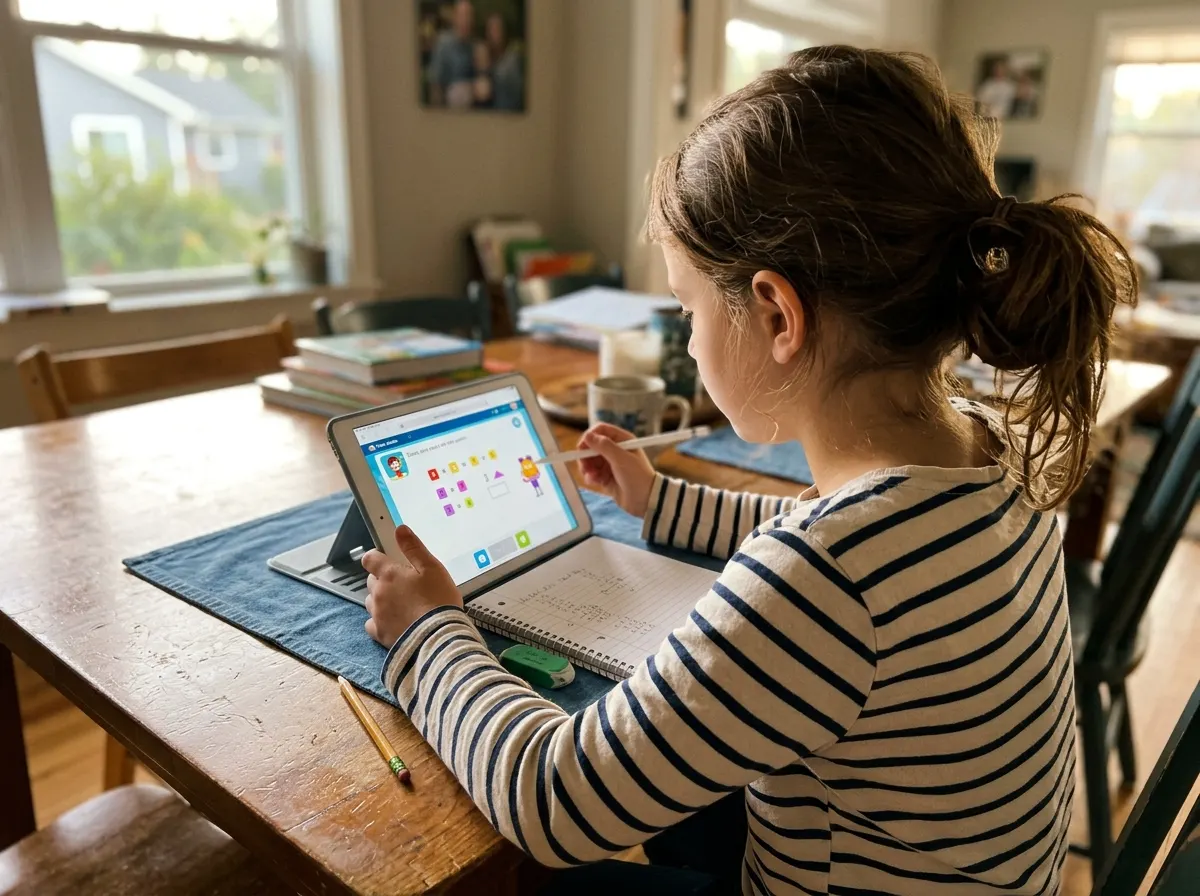
My son has never been this motivated to study math. He loves it.Jessica L.
This is priceless beyond compare. Luna challenges him to think in new ways and actually put in effort.Fiona K.
The ease of use and friendliness of the tutor encourages her at every step. Every time she unlocks a new level it raises her enthusiasm to learn new concepts.Louise H.

We tried two tutoring services before this. Luna is the first one my daughter will sit down with on her own, and her last report went up a full grade.Georgia P.

Luna goes beyond rote memorization. It empowers my child to explore, understand and excel. It is the educational AI that actually works, and I am excited to see my son thrive with it.Anand S.
Luna is great for her because she needs the multi-sensory approach as well as playful lessons to stay engaged.Tessa N.
She actually asks to do her tutoring sessions now.Karen M.
See Luna in action
Try a real lesson with Luna
Choose something your child is learning and experience how Luna teaches it step-by-step, just like a private 1:1 tutor.
Questions